
- No plastic
- Gentle on knives
- Won't scratch your pans
- Won't melt
- Easy to clean
- Oiled by hand
- Made to be handed down
- No plastic
- Gentle on knives
- Won't scratch your pans
- Won't melt
- Easy to clean
- Oiled by hand
- Made to be handed down
- No plastic
- Gentle on knives
- Won't scratch your pans
- Won't melt
- Easy to clean
- Oiled by hand
- Made to be handed down
Our first tools
Cutting boards in three sizes in solid acacia and a seven-piece utensil set in Java teak. More wood, steel and glass on the way.


what's really on your family's plate?
Your family eats plastic it never chose.
It comes off the board you chop on and the spatula you stir with.
- 79 million plastic particles a year can come off one plastic cutting boardEnviron. Sci. Technol. 2023
- 4.5x higher risk of heart attack or stroke when plastic builds up in the arteriesNEJM 2024
Take plastic out of the tools that touch every meal.
Shop plastic-free toolsStudies show a link, not yet proof of harm.

make the switch
Your old utensils vs. solid teak
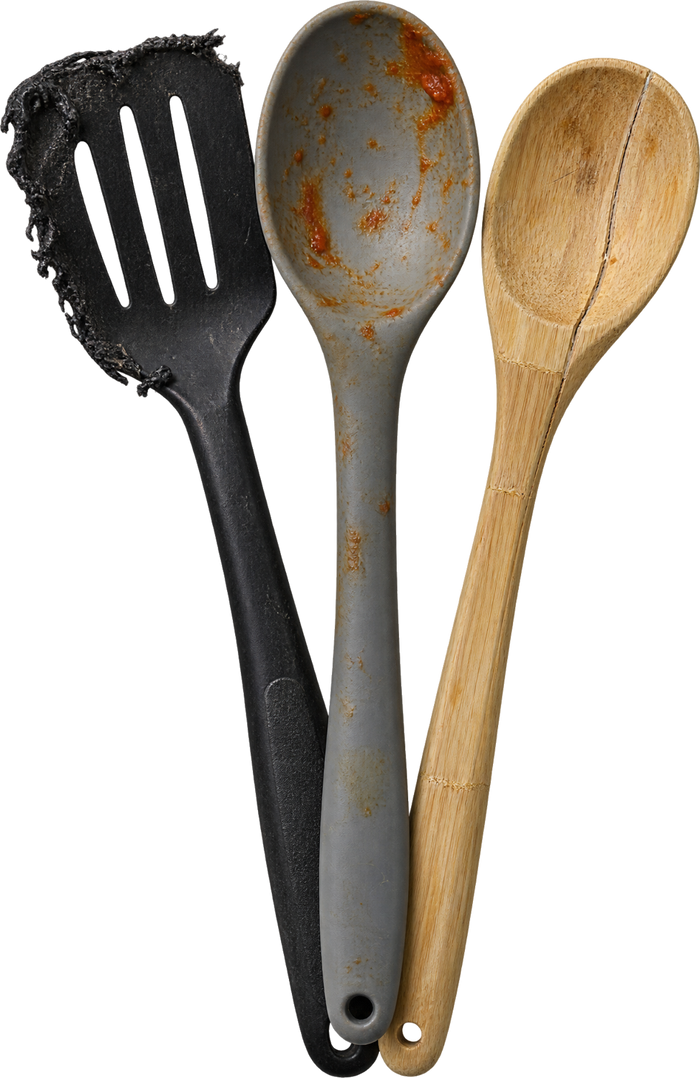
Your old utensils
Plastic, silicone, bamboo
- Plastic melts and can leach into hot food
- Silicone can leach compounds when hot
- Bamboo is held together with glue
- Lacquer cracks and flakes off

Indonesian Teak Utensil Set
Carved from solid wood
- Solid teak, carved in one piece
- Plant oil and beeswax, no lacquer
- No plastic, no glue
- Won't scratch your pans
Sources: nylon utensils (BfR), silicone, bamboo in plastic (EU).
Everything you want in your kitchen.
Nothing you don't.
- No plastic
- Solid hardwood
- Kind to knives
- Safe on non-stick
- Won't melt
- No coatings
- Plant oil finish
- Oiled by hand
- Easy to clean
- Made to last
- Free shipping over $95
- 30 day money back

how we make it
Slow, simple and the way it has always been done.
No factory coatings, no plastic handles, no shortcuts. Just good wood, a bit of patience and a finish you can eat off.
-
Cut from solid hardwoodA dense hardwood that is kind to your knives and your pans.
-
Sanded and oiled by handEvery board and every spoon, rubbed with plant oil and beeswax.
-
Left to cureSo the finish settles in before it reaches your kitchen.
Properware vs. plastic
Plastic kitchen tools are cheap and easy. Here is what you give up for that.
 Properware
Plastic
Properware
Plastic
Sources: microplastics from plastic boards, 2023 study; black plastic study, corrected in 2024. Wood needs a little more care: hand wash only.
What families say
-
Anna, Utrecht Example review★★★★★“Heavy, smooth and it smells lovely”
We swapped our old plastic board for the medium one. It's heavy, it doesn't slide around and it smells lovely after you oil it.
The plastic one is in the recycling now and I don't miss it.
-
Marco, Milan Example review★★★★★“No more melted spatulas”
The spoons don't melt or scratch my pans, and they look good on the counter.
I liked them so much I bought a second set for my mum.

made to be handed down
Our grandparents' kitchens had fewer things, and they lasted.
We started after looking at our own kitchen drawers: plastic spatulas with melted edges, a scratched chopping board, a juicer that broke in a year. So we went looking for tools made the old way, from honest materials.